

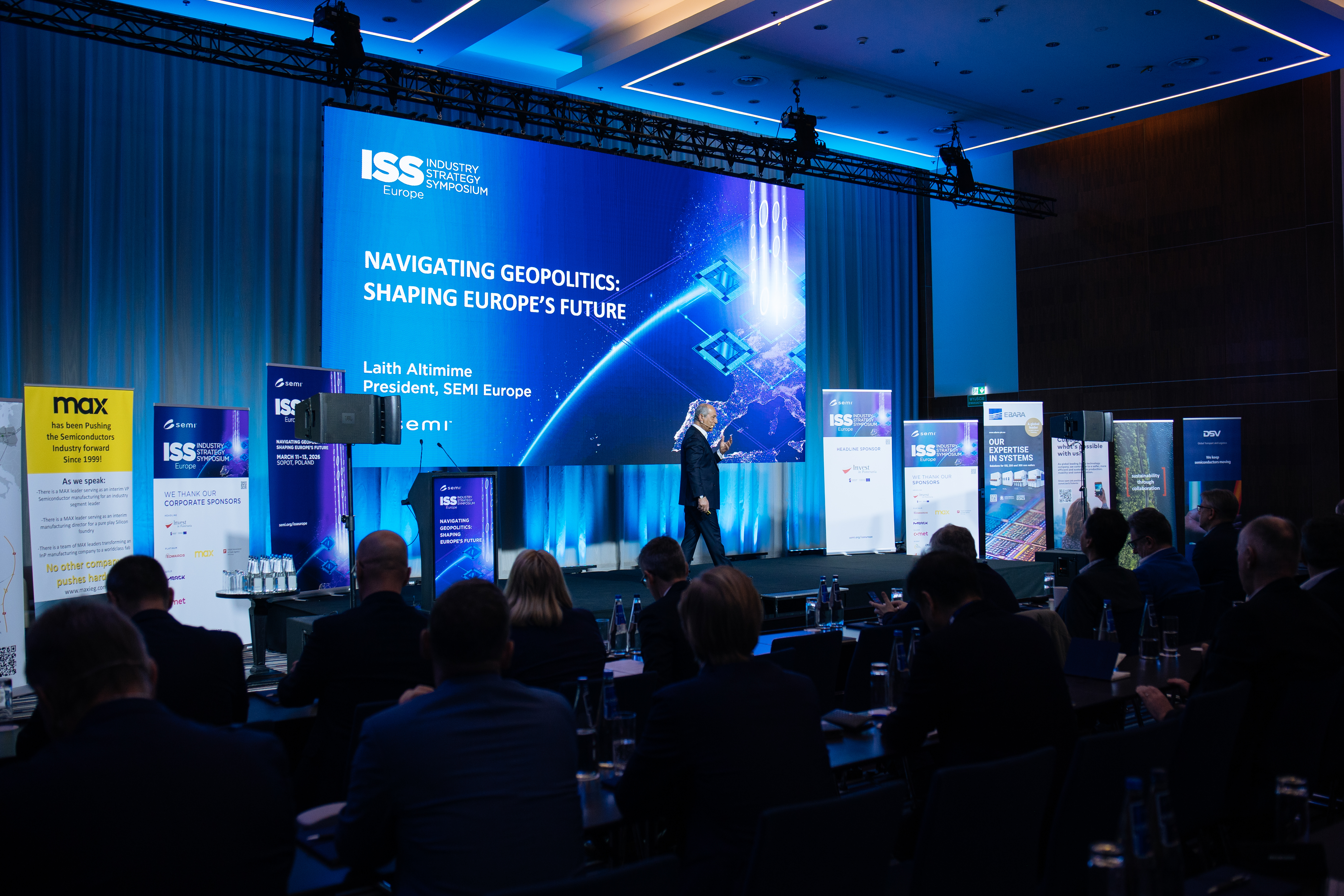
From March 11–13, Sopot once again became the meeting point for leaders of one of the world’s most strategic industries. The Industry Strategy Symposium Europe (ISS Europe) – one of the most prestigious events in the semiconductor sector – was held in Pomerania for the second year in a row.
This is a clear signal that the region is gaining importance within Europe’s microelectronics ecosystem. Poland’s return to the ISS calendar highlights the strategic role of Central and Eastern Europe in global supply chains and underscores the need to diversify production amid geopolitical challenges.
Key Data and Insights from ISS Europe
Chips have become the foundation of the modern economy, driving artificial intelligence, electromobility, energy, data centers, and defense technologies. The market scale is enormous: in 2025, global semiconductor sales reached nearly $800 billion—a 25% year-on-year increase—with forecasts projecting the market to reach around $1 trillion by 2030. This makes the sector one of the fastest-growing areas of the global economy.
Three forces are currently driving industry growth: artificial intelligence, energy, and geopolitics. AI is creating increasing demand for advanced integrated circuits, while the expansion of data centers could account for up to 10% of global energy consumption in the coming decades. At the same time, contemporary geopolitics is pushing for more resilient supply chains, making locations in Central and Eastern Europe attractive to Asian investors seeking stable, strategically positioned production bases.
Today, Europe accounts for only 7% of global chip production, but dominates in equipment and components: European companies generate over 30% of global semiconductor manufacturing equipment sales and over 40% of the components market. The ambitious goals of the European Chips Act aim to increase Europe’s market share from 12% to 20% by 2030, requiring investment in infrastructure, skills development, and regional cooperation.
Pomerania as a Growing Semiconductor Hub
Pomerania is emerging as one of the fastest-growing technology hubs in Central Europe. The region covers a significant portion of Poland’s semiconductor value chain, including IC design, R&D centers, and a growing startup ecosystem. Companies active in the region include MEP OSM Solutions, Intel, Synopsys, SK hynix, Polski Krzem, and Openchip.
Additionally, the region is developing strategic energy sources, including offshore wind farms with a capacity of 6–11 GW by 2040 and a planned nuclear power plant with a capacity of 3–3.7 GW, providing stable power for energy-intensive manufacturing processes.
Talent and Skills Development
Talent is critical. Pomerania is home to over 25 universities and approximately 90,000 students, with more than 5,200 specialists trained at Gdańsk University of Technology alone. The global semiconductor talent shortage is expected to reach 2.6 million by 2030, with Europe facing a gap of around 77,000 positions.
SEMI has responded to these challenges with university study visits. The first took place a year ago at Gdańsk University of Technology in cooperation with Invest in Pomerania. Since then, the program has reached over 400 students across Europe, highlighting career opportunities and Poland’s role in the global supply chain.
Collaboration and Ecosystems: Key to Success
The development of Europe’s semiconductor sector no longer depends solely on individual countries or companies. Its success requires coordination across the entire ecosystem: investments, talent, infrastructure, and partnerships. Poland and Pomerania, with their rapidly growing academic and industrial base, can become a strategic link in this European network.
– ISS brings together academia, industry, and policymakers so everyone can stay aligned and keep pace with the industry’s growth. Poland, with its strategic position, draws attention to Central and Eastern Europe. Supply chain resilience requires spreading industry across multiple European countries, not only to develop local ecosystems but also to reduce the impact of future disruptions on the entire semiconductor market. In this way, cooperation between countries, companies, and universities becomes key to success in the coming decade – summarizes Laith Altimime, President of SEMI Europe.